


November 9, 2025
How Preserved Nature Is Transforming Interiors
In sustainable architecture, biophilic design has long promised to enhance human health and productivity. Today, that promise is measurable. Neuroaesthetics and neuroarchitecture research now validates what designers have long intuited: biophilic elements can reduce stress hormones by up to 30 percent and boost cognitive performance by 15 percent. For the first time, our connection to nature is recognized as a neurological necessity.
This scientific validation has sparked a surge in plant-based solutions across commercial architecture. Yet living walls come with significant operational challenges: constant watering, specialized lighting, ongoing maintenance, and recurring replacement costs. Meanwhile, artificial greenery, or faux plants—which are virtually always derived from petrochemical processes—fail to deliver biophilic benefits despite marketing claims, as research shows our brains distinguish authentic natural elements from synthetic imitations, even subconsciously.
Integrating Nature Into Commercial Spaces
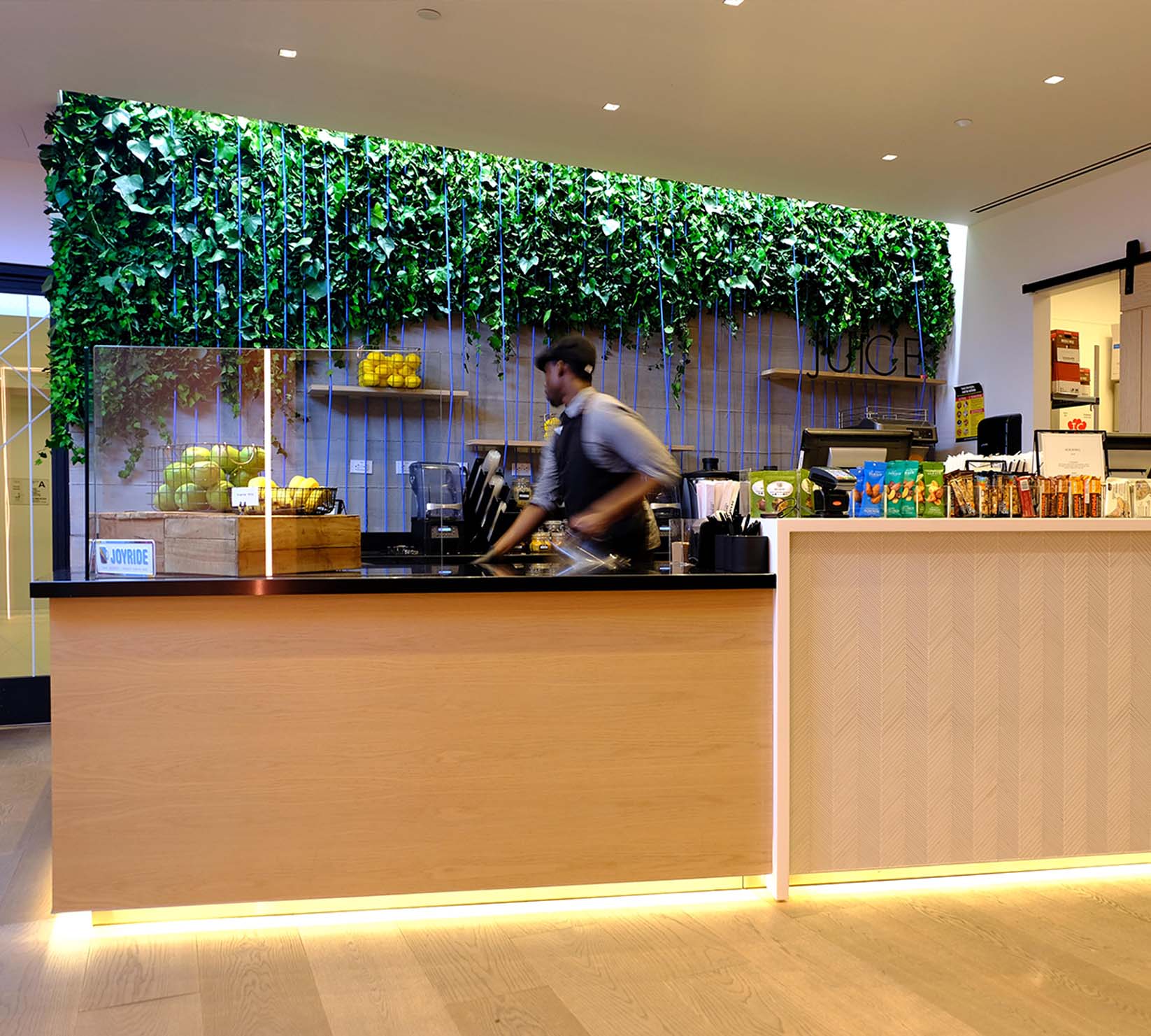
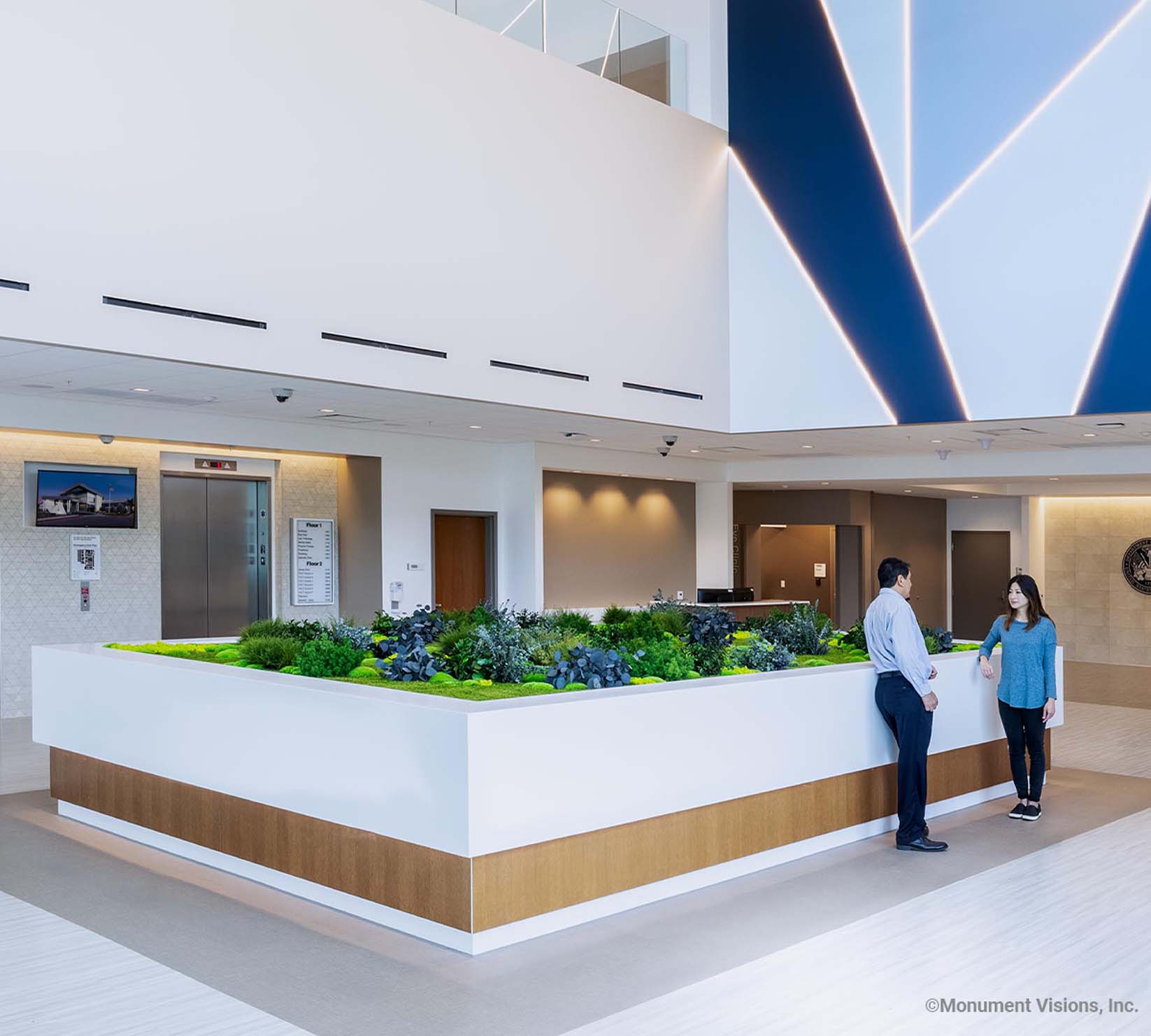
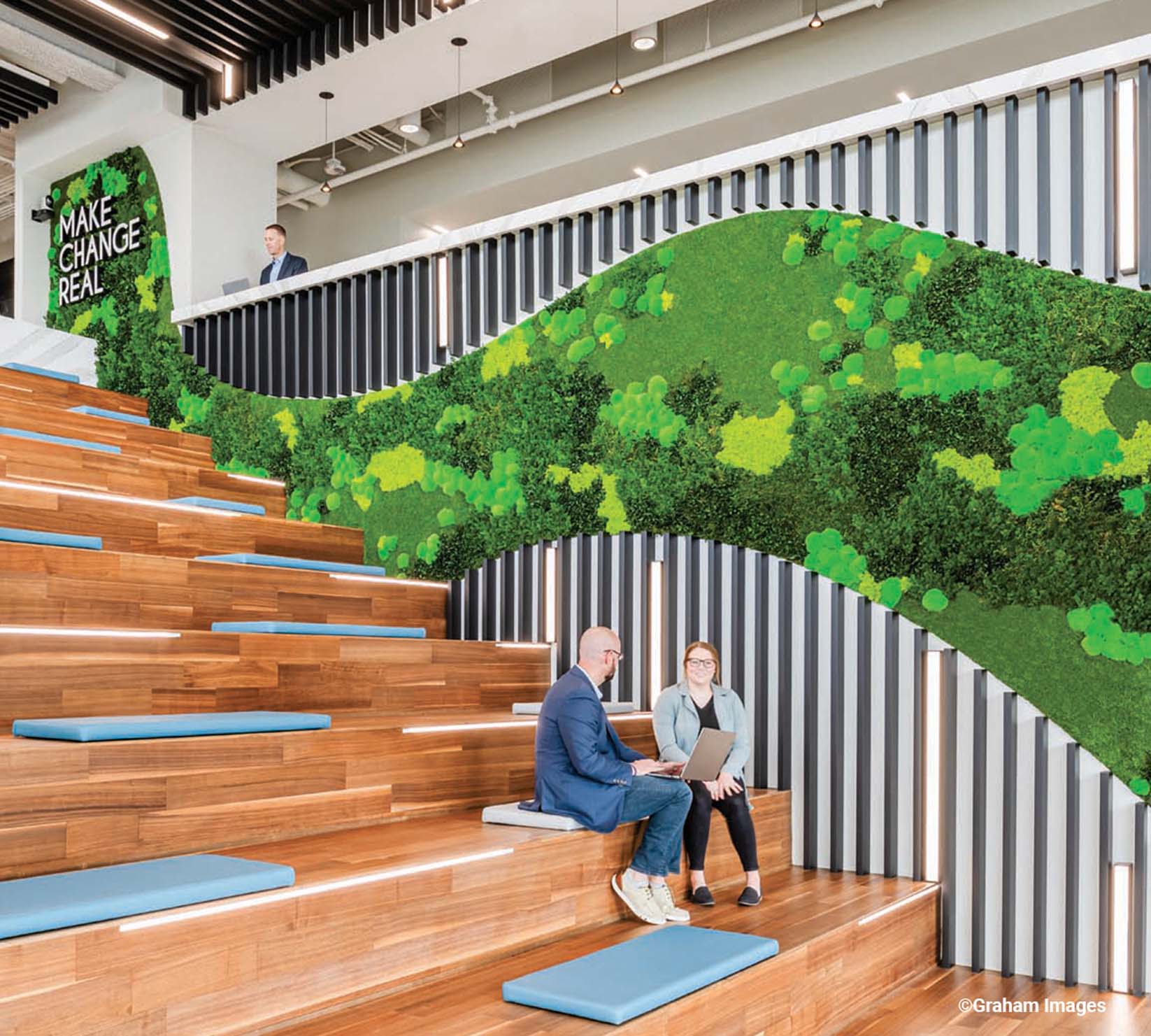
Garden on the Wall® (GOTW) solves this problem. Since 2014, the company has pioneered preserved biophilic design solutions in the U.S., revolutionizing the integration of nature into commercial spaces with its natural preserved moss walls, green walls, and planter inserts that require no water, no light, and no ongoing care.
The breakthrough lies in GOTW’s proprietary preservation process, which uses non-toxic, plant-based, biodegradable liquid that replaces plant sap—essentially freezing plants in time while maintaining their fresh, vibrant appearance. The installations last 10 to 12 years, extendable to more than 20 years through the company’s unique rejuvenation program. This represents a fundamental shift in total cost of ownership, eliminating the resource consumption and operational disruptions of living walls while providing consistent access to nature’s proven wellness benefits.
A Turnkey, Certified Solution
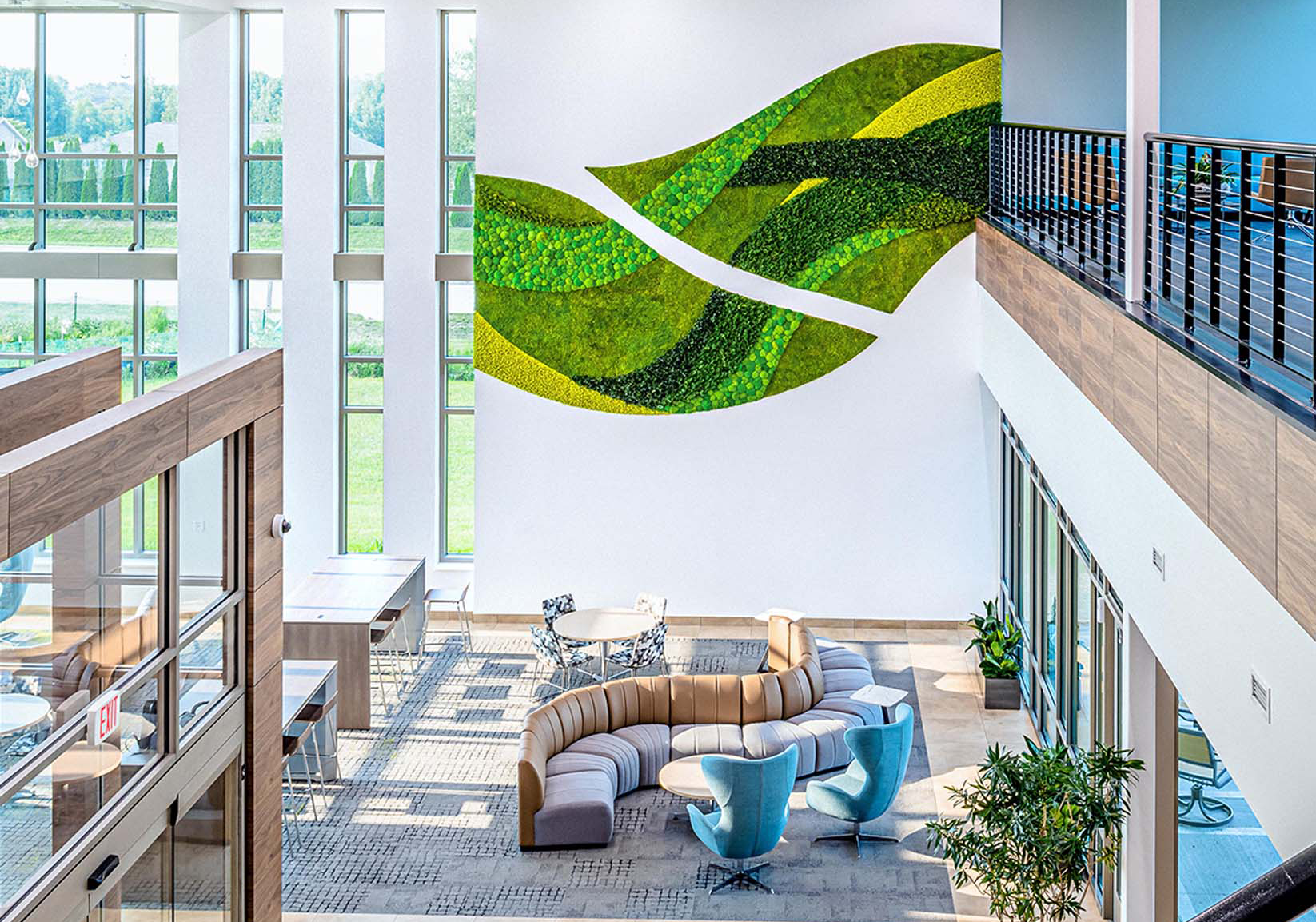
GOTW’s team manages design, fabrication, acclimation, installation, and post-installation touch-up—all under warranty for seven years and with full documentation for specification, submittal, and certification needs. But the company’s approach goes beyond mere convenience. Its installations activate multiple dimensions of biophilic design, including visual connections, tactile material interactions, and the incorporation of biomorphic patterns and forms using locally sourced moss and plant species. This multilayered approach maximizes therapeutic benefit while supporting LEED, WELL, and Fitwel certification requirements.
In an era where measurable health outcomes drive design, preserved nature installations (moss walls, preserved gardens, planting systems and draping foliage crafted with preserved plants) represent the evolution of biophilia: scientifically validated, operationally sustainable, and built to last. Garden on the Wall® didn’t just pioneer this category, they continue to define it.
Would you like to comment on this article? Send your thoughts to: [email protected]
Latest
Viewpoints
What Is and Is Not Biophilic Design?
The creator of the concept of Biophilic Design explains effective strategies that keep us healthy by bring us closer to nature.
Products
5 Smart Designs That Boost Brain Function
Discover products that blend neuroscience and biophilic design to boost focus, reduce stress, and support brain health.